
Can Qimen Dunjia Forecast Investment and Trades?
Can Qimen Dunjia Forecast Investment and Trades?
QIMEN DUNJIA
2/21/20249 min read
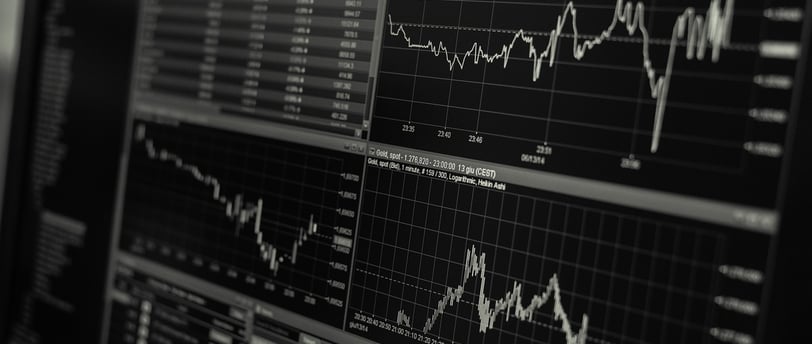
Divination and the pursuit of wealth go hand-in-hand. Used correctly, it gives you the edge in decision-making. You will be able to figure out when or whether you should invest in a company, commodity, or even cryptocurrency.
Qimen Dunjia was the divination system of emperors and generals. Armed with the secrets of divination, they shaped battles to their advantage, calculated the best times to carry out strategies, and uncovered hidden information.
With the right knowledge, you can adapt this system to give you the winning edge in making trading and investment decisions.
But it won’t give you a guaranteed strategy to make millions on the stock market. In fact, if you don’t have a strategy to begin with, the only guarantee is the guarantee of loss.
Set Expectations
Let’s get the obvious out of the way: if anyone can use qimen dunjia or any other divination method to make a living off trading and investing, then no one would offer such services.
Most people simply aren’t cut out to be full-time traders or investors. For every Warren Buffet, there are millions of regular people. For every full-time trader who consistently makes money, there are at least nine who consistently lose money.
Full-time traders or investors possess a rare combination of advantages: capital, mentors, resources, discipline, intelligence, stress tolerance. Without these traits, it will be impossible to sustain a living from investment or trading.
The kind of full-time trader or investor who would benefit the most from qimen need it the least. They already have other means to confirm their decisions; at best, qimen simply helps them confirm or refine their decisions.
This is how you should view qimen dunjia. You should not count on it to give you a sure-win strategy to make millions on the market. Instead, you should use it to gather the information you need to create an edge over the market.
Start with Strategy
Qimen dunjia is the art of strategic forecasting and execution. Therefore, the best way to use qimen dunjia for investments and trades is to complement an existing strategy.
Start with strategy. Figure out what kind of investor or trader you are. Think about the markets you are willing to explore, how much capital you can risk, how much time you have to assess your decisions.
Before you even think about investments, much less trading, you need to build a solid strategy. This can take the form of exhaustive fundamental analysis, sophisticated technical analysis, specialisation in one industry or another, or a combination of the above.
Without a strategy, relying on qimen dunjia is no different from gambling. You’re just making bets at random times, hoping that they will pan out. You’re far more likely to blow up your account and never invest in anything ever again.
Once you have developed your strategy, think about how qimen dunjia integrates with the strategy. The most obvious application is to make buy or sell decisions. You can also use it to assess news releases, market conditions, or obtain other information you may need to round out your strategy.
Here’s a tip: the lower the time frame, the less useful qimen will be.
Let’s take scalping. A scalper trades in the 5 or 1 minute timeframes, or even in the 30 and 15 second timeframes. Every qimen chart spans 2 hours. It is impossible for a scalper to use qimen to assess every single trading decision. The best way to use qimen here is probably to assess the overall market condition, so that he can go long or short as needed.
For someone who invests in higher time frames, holding on to his investments for days, weeks or even months, qimen is a powerful tool to assess market conditions and forecast the possibility of profit. But only if it is used correctly. It is not a substitute for the fundmentals.
Focus on the Fundamentals
Every field of trading or investment has its fundamentals. Ignore them at your own peril.
In real estate, location is everything. In cryptocurrency speculation, narratives drive extreme price swings in the short term, but utility ensures long-term growth. Whichever market you wish to invest in, you must first focus on the fundamentals.
Traditionally, masters only consult qimen dunjia when there is a signal to do so. This could mean a client asking them a question, or a sudden change in circumstances.
For trading and investments, you should first create a set of trigger conditions for a buy or sell decision. Only consult qimen when the trigger conditions are activated. This cuts down on unnecessary noise, decision fatigue and analysis paralysis. It also helps you filter out false signals, saving you money and heartache.
Consider this situation: while scrolling through price feeds, a trader believes he has spotted an opportunity to place a trade. He sees prices make a new high over the past hour. He believes that price will continue to rise, and prepares to place a long.
The trader calls up a qimen chart. The chart is filled with favourable formations. he confidently places a long trade.
And prices sink through the stop loss.
What happened? As it turned out, the ‘new high’ was no high at all. On the 4-hour and 1-day timeframes, it was actually the point of maximum resistance. There was insufficient momentum to overcome resistance, and so the price fell.
How does that explain the lucky formations? Well, it was certainly an auspicious time to place a long… but in a different asset. By hyper-fixating on that apparent trade opportunity and ignoring the fundamentals of support and resistance, he missed out on the real opportunity elsewhere.
Never invest or trade without a strategy. Only consult qimen dunjia if the conditions for your strategy are satisfied. And your strategy must involve fundamentals. If any of these elements are missing, you’re just playing with fire.
Manage Your Risk
There is no foolproof trading or investment strategy. Qimen can help create an edge, but it is not a replacement for strategy. Once you commit money, you must be prepared to lose it.
Going back to the case mentioned above, the trader was fortunate to have a stop-loss. It helped him limit his losses to a manageable amount. As it happened, that particular asset continued to lose value through the rest of the day. Without the stop-loss, instead of eating a loss of 1%, he would have absorbed a loss of 10%. That would be even more painful.
Before you commit to a trade or an investment, you must calculate your stop-loss. Decide beforehand how much money you are willing to lose. Place your stop-loss at an intelligent point. Then, and only then, should you even consider putting money down.
Here’s another scenario. A trader receives a price alert. The asset he is monitoring has broken our of a price structure. Satisfied that the market conditions meets his strategy, he consults qimen dunjia. The qimen chart shows a favourable outcome. He places his trade.
At first, the price climbs steadily. But two hours later, momentum begins to reverse. This downward pressure grows. At the close of the trading day, price has plummeted to a new low.
What happened?
The forecast was accurate. The chart did show a possibility for profit. But the trader had placed his take profit level far too high for the market conditions, and he didn’t move up his stop market order to lock in profits. As a result, he gave back everything he made to the market, and then some more.
Qimen dunjia does not respect ideas like profit targets, stop-losses, support, resistance, trends, momentum and so on. It is not a specialist tool for market speculation, merely a highly adaptable tool that can be applied to investment strategies.
Qimen cannot tell you where are the best points to place take profit and stop loss orders. You have to calculate them yourself. It’s not uncommon for price to wick down past a stop loss, then rocket past the take profit level. To guard against this outcome, you have to do the work of calculating the best places for stop and take profit orders. Qimen is not a substitute for strategy or financial acumen, merely a complement.
Risk management is critical. Placing an order without a stop-loss is like jumping out of a plane without a parachute. Before you rush to place your order, first manage your risk.
The Useful Gods
Now, at last, we talk about the useful gods for forecasts relating to trades and investments.
Wu (戊), yang earth, represents capital. It is the flow of wealth into or out of the market.
The Life Door (生) represents profit.
At the most basic level, you want to look at the relationship between the palace of the Life Door and the palace of Wu. If the Life Door produces Wu, or if both of them share the same element, then there is a good chance of profit.
But remember: if it were this easy to make money using qimen, then everybody would be doing it.
Other stars and palaces provide additional information. The formations in a palace may give you clues as to how the market will evolve over time. The stars in a palace may warn you of future losses, even if the market looks good now.
Such a detailed reading requires a higher level of knowledge. Without a grasp of the qimen fundamentals, it will be difficult, not to mention irresponsible, to go into any more detail in this blog.
Besides, different readers have different methods.
Backtest Everything
We are aware of at least three different methods to use qimen dunjia to forecast trading and investment decisions. The one thing they have in common is that they rely on Wu in some capacity. How do you know which method to use?
There is only one answer to this question: backtest.
If you plan to use qimen to support an investment portfolio, you must be certain that your qimen readings are accurate. You can’t just trust some random person on the Internet to give you an investment forecasting method—not even us. It’s your money on the line. You need to know whether you are using the right methods and interpretations.
Qimen is unique in that it can be backtested. I Ching readings and tarot spreads are generated on the spot. It is very difficult to use these methods to predict price action—at least, not without sinking a lot of time and money into it. With qimen, you simply consult the chart at the moment the conditions of your strategy are fulfilled. Apply this same approach to backtesting.
Call up a price chart of an asset you are interested in, and use qimen to assess historical price data alongside your strategy. When an interpretation predicts profits, then prices should go up. If the chart signals losses, then price action should either be choppy or sink to a low. Record the number of accurate forecasts on a document.
If your interpretations are at mostly accurate, then you have a good grasp of forecasting for investments and trading. On the other hand, if your method generates a significant number of misses, then it’s time to figure out whether you need a new method of interpreting the charts.
Whichever divination method you use, it must be more accurate than the investment or trading strategy you already employ. If your readings are less accurate than your strategy, then you shouldn’t rely on qimen at all.
This is why we don’t want to go into greater detail on the use of qimen for investment. There is a lot of information out there already. Those three methods mentioned above presumably work for their respective originators. They may not necessarily work for you.
Ultimately, qimen divination should be treated as simply a part of your strategy. The only way to figure out if a trading or investment strategy works is to backtest it against historical data. You need to find out what works for you, for your circumstances, not the circumstances of the person who created the interpretation method.
And who knows, by backtesting qimen against price data, you might learn a few new things about qimen that you never knew.
Do You Need Qimen for Investment and Trading?
For those skilled in divination, it is extremely tempting to use their skills to speculate on the stock market, or any other market. It is easy to think that divination will give you an unbeatable edge, especially if you know you are highly accurate in other fields.
It is equally easy to lose a lot of money thinking this way.
As we mentioned at the beginning of this post, not everyone is cut out to be a trader or investor. And that is alright. Divination arts like qimen dunjia should be used to support what you are already good at, not to force yourself into becoming something you will never be.
For those who do have what it takes to be a trader or investor, they don’t necessarily need qimen dunjia to support them. We know of a cryptocurrency investor with a success rate of ‘only’ 36%. His strategy is based on identifying and capturing long-term trends. He makes many losses, but they are tiny. When he does make a profit, he usually earns hundreds of thousands, or even millions, of dollars/ though his strategy has a low success rate, it is a winning strategy for him. For someone like this, qimen can help him identify the right times to enter the market and reduce his losses. Without this winning strategy, qimen would not be able to help him.
Qimen first and foremost is the art of strategic forecasting and execution. More than just divination, it either assesses your strategy or gives you a strategy. But without strategy, without a clear idea of what you want, qimen can’t help you.
Suppose you already have a strategy. Then an opportunity for investment arrives. It meets the trigger conditions for your strategy. You just need a final confirmation, or an assessment of the market. This is when you should use qimen: to support a strategy, not to replace one.
And if you need help figuring out whether you should commit to an investment, book a reading with us here.